








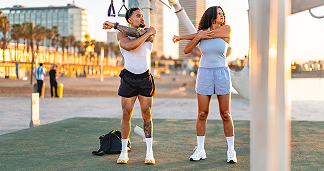


What Is Athletic Performance Training?
Most gym-goers train to look better or feel healthier. Athletes train to perform better and the distinction matters enormously. Athletic performance training is the science of systematically developing the physical qualities that determine sport outcomes: explosive power, speed off the mark, lateral agility, endurance under pressure, and the ability to repeat high-intensity efforts. It is not general fitness repackaged with cones and ladders. It is a discipline with its own methodology, assessment tools, and periodization science.
In Canada, where hockey, soccer, basketball, lacrosse, and multi-sport youth athletics create year-round demand for qualified coaching, performance-trained professionals occupy a distinct and growing niche. The trainers who understand this space and hold the right credentials, are consistently among the highest earners and most referred practitioners in the Canadian fitness industry.
Performance Training vs. General Fitness: The Key Distinctions
-
Goal orientation: performance training targets sport-specific outcomes (faster 40-yard dash, higher vertical, better change-of-direction); general fitness targets health and body composition.
-
Programming structure: performance programs use periodization models (linear, undulating, block) structured around a sport season; general fitness is often linear and non-periodized.
-
Assessment: performance trainers use sport-specific movement screens, power output testing, and speed/agility benchmarks; general fitness relies on basic fitness assessments.
-
Client type: performance clients are competitive or aspiring competitive athletes with specific events or seasons; general fitness clients seek sustained health and aesthetics.
-
Intensity and specificity: performance sessions are carefully loaded to produce sport-specific adaptations without compromising sport practice; general fitness has more flexibility.
The Canadian Sports Landscape, Where Performance Trainers Work
Canada's sports culture creates consistent, cross-country demand for performance coaching. Hockey remains the dominant sport for performance training demand, with off-ice power, skating mechanics support, and injury prevention programmes driving a robust market from Vancouver to Halifax. Soccer, basketball, and lacrosse follow closely, with a rapidly growing youth athletics segment as parents invest earlier in physical development for their children.
-
Ice hockey: off-ice power output, edge strength, hip mobility, skating mechanics support, the single largest performance training market in Canada.
-
Soccer / football: repeated sprint ability, ACL injury prevention, change-of-direction training for youth and adult competitive players.
-
Basketball: vertical power, lateral quickness, conditioning, NBA development pipelines and university recruiting driving demand.
-
Lacrosse: rotational power, conditioning, upper-body strength, fastest-growing youth sport in several Canadian provinces.
-
Multi-sport youth athletes: long-term athlete development (LTAD), physical literacy, anti-specialization programming.
-
Combat sports: MMA, wrestling, BJJ, power-to-weight optimization, energy system conditioning.
-
Masters and recreational athletes: adults 35+ competing in endurance, team, and racquet sports, a growing and underserved segment.
The NASM OPT Model Applied to Athletic Populations
The NASM Optimum Performance Training (OPT™) model is the scientific framework underlying all NASM certification programmes. For general fitness clients, the OPT™ model provides a stabilization-strength-power progression. For athletic populations, NASM's Performance Enhancement Specialist (PES) curriculum extends this into sport-specific programming: plyometric science, speed mechanics, agility development, and periodization across pre-season, in-season, and off-season phases.
What separates NASM-trained performance professionals from those without formal credentials is the ability to systematically assess, programme, and progress athletes using evidence-based methods, not instinct and imitation. The 10 Pillars™ framework, developed by Jesse Benson as NPTA™'s proprietary coaching methodology, parallels the OPT™ model's commitment to structured, progression-based development: building from a stable foundation toward peak performance outputs.

The NASM PES - Canada's Performance Coaching Credential
The NASM Performance Enhancement Specialist (PES) is the most recognized performance training credential in the Canadian market. Built on the CPT foundation, the PES certifies fitness professionals to design and implement sport-specific training programmes using NASM's evidence-based methodologies. It is a post-CPT specialization, meaning it deepens a trainer's value proposition rather than replacing foundational knowledge.
NASM PES AT A GLANCEPrerequisite: Valid NASM CPT certification. Covers: movement assessment for athletes, speed and agility development, plyometric programming, sport-specific periodization, energy system training. Recognition in Canada + Globally: accepted by boutique performance facilities, sport academies, university athletics departments, and private coaching businesses. Available through NPTA™: Canada's Official NASM Partner. Study with Canadian instructors, real gym floor apprenticeship, and dedicated graduate support. |
Career Paths for Performance-Certified Trainers in Canada
-
Private performance facility trainer: boutique athlete-development studios in major Canadian cities, serving hockey players, soccer clubs, and individual athletes.
-
Youth sport academy coach: structured development programmes for ages 8–18, increasingly the fastest-growing employment category in Canadian performance training.
-
University or college athletics support staff: S&C support roles for varsity athletics at Canadian universities, often require the PES alongside hands-on experience.
-
Independent performance trainer: building a private book of athlete clients across one or multiple sports; one of the highest income ceilings in Canadian fitness.
-
Corporate wellness + recreational athlete hybrid: trainers who split time between performance clients and corporate wellness programmes to diversify revenue.
How to Start Your Performance Training Career Through NPTA™
The career path is clear: NASM CPT through NPTA™ builds the foundation; NASM PES through NPTA™ opens the performance door. NPTA's apprenticeship program provides real gym floor experience with real clients, not simulated labs, so graduates enter the performance market with both credentials and practical competency. For trainers already holding a CPT who want to specialize, the PES is the logical and highest-impact next step.
What is athletic performance training and how is it different from regular personal training?
Athletic performance training is a specialized form of fitness coaching focused on improving sport-specific physical qualities, speed, power, agility, and endurance, for athletes. It differs from general personal training in its use of periodization, sport-specific programming, and performance assessments rather than general health and body composition goals.

What certification do I need to become a sports performance coach in Canada?
The NASM Performance Enhancement Specialist (PES) is the most widely recognized performance training credential in Canada. It requires an active NASM CPT as a prerequisite. NPTA™ Canada's Official NASM Partner, offers both the CPT and PES through its national programme.
Is the NASM PES recognized by Canadian sports organizations and facilities?
Yes. The NASM PES is accepted by boutique performance facilities, private sport academies, and athletic training businesses across Canada. It is one of the most credible sport-specific certifications available to Canadian fitness professionals.
Can a personal trainer work with professional athletes?
Personal trainers with the NASM PES can work with recreational, amateur, and pre-professional athletes. Professional sports organizations typically require additional experience and credentials. The PES, combined with hands-on experience through programmes like NPTA's apprenticeship model, provides a strong foundation for building toward elite-level work.
How much do performance trainers earn in Canada?
Performance trainers with specialized credentials can earn between $55,000 and $95,000+ annually depending on setting and clientele. Private performance coaches with a strong athlete client base, particularly in hockey or multi-sport settings, can exceed this range as their practice grows.
What is the NASM OPT model and how does it apply to athlete training?
The NASM Optimum Performance Training (OPT) model is a scientifically validated programming framework progressing through stabilization, strength, and power phases. For athletes, the NASM PES extends the OPT model with sport-specific periodization, plyometric protocols, and speed-agility development systems.
SCIENCE & EVIDENCE REFERENCES
|
SOURCE / STUDY |
KEY CLAIM |
APPLICATION IN ARTICLE |
|
NASM — OPT Model Research |
Periodization using the OPT model produces measurable improvements in power, strength, and sport-specific performance metrics. |
Cited in Section: The NASM OPT Model Applied to Athletic Populations. |
|
Sport Canada — Participation Report 2025 |
Hockey participation in Canada exceeds 640,000 registered players; youth sport participation up 8% since 2022. |
Cited in Section: The Canadian Sports Landscape. |
|
CSEP (Canadian Society for Exercise Physiology) |
Evidence-based periodization for youth athletes reduces overuse injury rates and improves long-term athletic development outcomes. |
Cited in Section: Career Paths — Youth Sport Academy. |


