


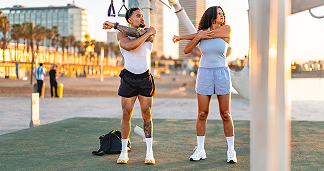


In the fitness industry, there is often an obsession with accumulating "perfect knowledge." New trainers spend thousands of hours studying complex biomechanics, molecular nutrition, and advanced periodization. While education is the vital foundation of any career, many professionals fall into the trap of believing that the person who knows the most is the person who gets the best results.
The reality on the gym floor is different. Experience vs. knowledge in personal training is not a battle of which one is better, but a realization that knowledge only matters if it can be successfully applied to a living, breathing human being.
Experience is what turns static facts into dynamic results. It is the bridge between understanding how a muscle works and understanding how to help a busy, stressed-out client actually move. In this guide, we explore why experience matters more than perfect knowledge and how you can balance both to become an elite coach.

The Knowledge Trap: When "Perfect" Gets in the Way of "Done"
Many trainers suffer from "analysis paralysis." They are so focused on the "perfect" scientific protocol that they struggle to help the average person who just needs to start moving.
Information vs. Implementation
A textbook will tell you the exact degree of hip flexion required for a standard squat. It will explain the force-velocity curve in detail. However, that knowledge is useless if you cannot help a client with tight ankles and a fear of falling perform a basic sit-to-stand.
Experience teaches you that a "good" workout that actually happens is infinitely better than a "perfect" scientific program that a client finds too intimidating to start. Experience allows you to simplify the complex, making fitness accessible rather than overwhelming.
The Problem with Jargon
One of the biggest struggles for "knowledge-heavy" trainers is the inability to translate science into plain English. If you explain to a client that they need to "focus on the eccentric phase to maximize mechanical tension and metabolic stress," you’ve likely lost them.
Experience gives you the communication skills to say: "Slow down on the way down to build more muscle." The veteran coach knows that the client doesn't need to know what you know—they need to know that you know how to help them.
Why Experience Matters: The Soft Skills of Fitness
While a certification proves you have a high "Fitness IQ," your experience determines your "Coaching EQ" (Emotional Intelligence). Here is why experience wins every time in the real world:
1. The Art of the Pivot
In a textbook, every session goes exactly as planned. In real life, the squat rack is taken, the client has a headache, or the gym is too loud for your planned meditation.
Experience is what allows a coach to pivot instantly. A veteran trainer has a mental library of regressions, progressions, and equipment alternatives. They don't panic when the plan changes because they understand the intent of the movement, not just the exercise itself.
2. Reading the "Human" in the Room
Perfect knowledge can’t tell you when a client is lying about their recovery or when they are on the verge of tears because of a bad day at work. Experience gives you the intuition to look at a client's body language and realize that today isn't the day for a PR—it's a day for a "movement as medicine" session.
3. Building Trust Through Results
You can have a Ph.D. in sports science, but if you cannot build rapport, your clients won't stay. Experience teaches you how to manage expectations, celebrate small wins, and provide the specific type of accountability that each individual needs. Trust is earned through consistent, practical results—not through reciting facts.
Education Through Experience: The NPTA Perspective
At NPTA, we are an education-first organization, but we believe that education must be experience-driven. We don't just teach you the science; we teach you how to translate that science into a career.
Applied Nutrition and Coaching
Take nutrition as an example. You can study the Krebs cycle for weeks, but that won't help you coach a client through a social dinner where they feel pressured to eat off-plan. Real nutrition coaching experience involves understanding human behavior, social environments, and habit formation.
This is why we focus on "Applied Education." We want our trainers to be the most knowledgeable in the room, but also the most practical.

How to Balance Knowledge and Experience
To reach the top 1% of the fitness industry, you cannot ignore either side of the coin. You need the knowledge to be safe and effective, and the experience to be successful and relatable.
-
Stop Studying, Start Coaching: If you have your certification, stop buying more books for a moment and start working with people. Offer free sessions to friends or family to practice your cueing and assessments.
-
Practice "Simplification": Take a complex topic (like the NASM OPT™ model) and try to explain it to a 10-year-old. If you can’t make it simple, you don’t understand it well enough to coach it.
-
Seek Mentorship: Don't just learn from someone who has more letters after their name; learn from someone who has more hours on the gym floor. Watch how they talk, how they handle "problem" clients, and how they manage their time.
-
Embrace the "Messy" Middle: Real coaching is messy. You will make mistakes. Your first few programs won't be perfect. This is where the real learning happens.
Knowledge is the Map, Experience is the Journey
Knowledge is like a map. It shows you the terrain and the best routes to take. But experience is the actual journey. It’s what happens when you hit a roadblock, get caught in the rain, or find a beautiful shortcut that wasn't on the map.
If you want to be a world-class fitness professional, don't just be a student of fitness—be a student of people. Use your knowledge as your foundation, but let your experience be your guide.

Ready to take your knowledge to the next level?
Whether you are looking to master nutrition, specialize in behavior change, or find a mentor who has walked the path before you, NPTA is here to bridge the gap between "knowing" and "doing."


